20–30 minutes
Short enough for a lunch break or an evening after work.
Feature · Manchester · 5 min read
People who have moved here are no longer just waiting for their next evening class. Instead, they talk in between – 25 minutes here, 25 minutes there, whenever the day happens to leave a gap.
The maths behind it
How many minutes you actually speak
* worked out for a class of 15–20 learners. One dot = one minute.
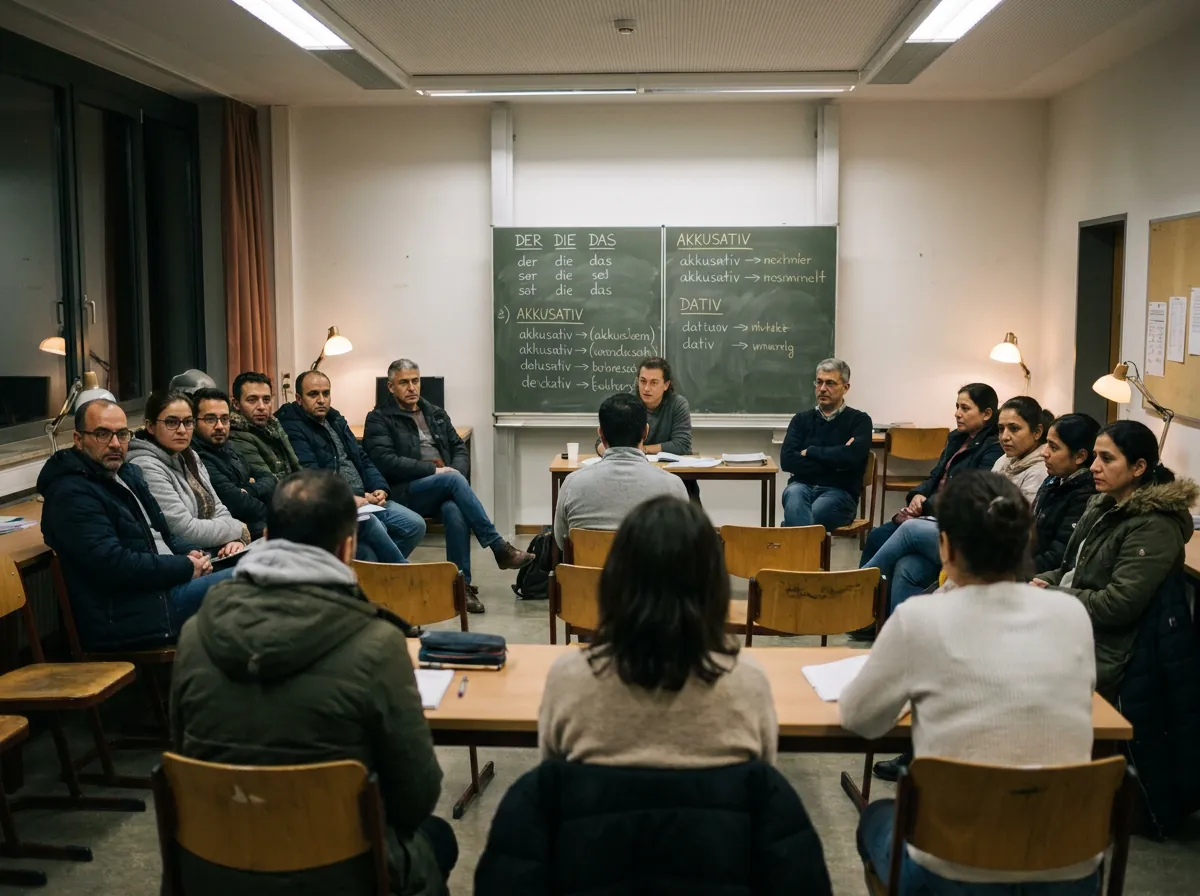
When Lina moved to Manchester for a new job just over a year ago, she signed up for an English class within her first few weeks: two evenings a week, straight after work. She learnt a lot there. And yet something was still missing.
“In class I took notes and understood everything. But the moment I had to answer myself – at the till, on a team call, on the phone to my landlord – my mind just went blank.”
Language teachers hear this all the time. A group class is reliable for vocabulary and grammar. What almost inevitably gets squeezed is the time you spend speaking yourself. With fifteen to twenty people in the room, each learner often gets only a few minutes per lesson in which they actually talk.

A chain reaction
Sentences come faster and stop feeling like hard work.
At work you start to catch irony, hints and what’s left unsaid.
Fewer misunderstandings and more self-assurance day to day.
Labour-market research finds a difference in earnings, on average.
That’s no guarantee for any one person. The figure below comes straight from that research.
higher earnings for immigrants in the UK who are fluent in English, compared with those who aren’t.
Source: Dustmann & Fabbri, “Language Proficiency and Labour Market Performance of Immigrants in the UK”, The Economic Journal 113 (2003). Not automatic – but a link that research keeps finding.
The class gives you the scaffolding. You only get confident once you open your mouth yourself – and the more often, the better.
Short & often beats long & rare
This is exactly where more and more learners are stepping in. Rather than waiting for their next lesson, they book short one-to-one conversations with freelance tutors – for example through platforms like Preply.
Short enough for a lunch break or an evening after work.
A little, regularly, beats a lot, rarely – it keeps what you’ve learnt active.
Early before work, late in the evening or at the weekend – on your phone or laptop.
Four months on
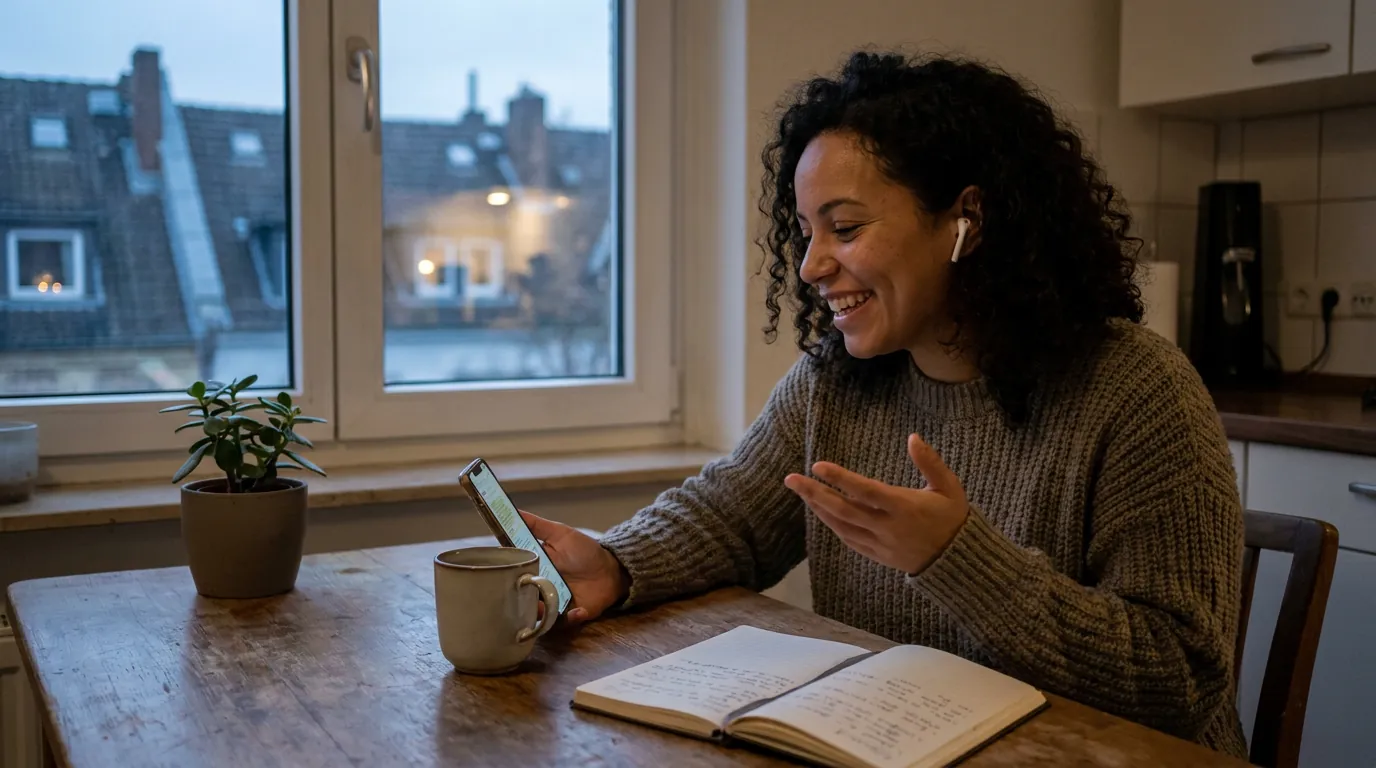
For about four months, Lina has combined her class with three short conversations a week – usually at the kitchen table, sometimes on the balcony, always on her phone.
English class Conversation with a tutor
“I wouldn’t give up my class. But I only really relaxed when speaking thanks to these little conversations in between.”
Lina, Manchester
Reader questions
No. Most people use one-to-one conversations on top of a class, not instead of one. If you need a certificate or have an exam coming up, a structured course is usually hard to avoid.
It varies from person to person – nobody can promise anything. Still, many say that after a few weeks of regular conversations they feel noticeably more confident speaking.
That mainly depends on the tutor, their experience and the times you want. You can compare profiles and reviews at your own pace beforehand, and many people start with a trial lesson.
According to Preply, if you’re not happy with your trial lesson you can try a different tutor for free. So it’s worth looking at a few profiles.
Whether a class, short conversations or a mix of both works best is ultimately down to your own routine. But one pattern comes up again and again: people who speak regularly – even if only for a few minutes – grow confident noticeably faster.
Your next step
Browsing a few tutor profiles only takes a couple of minutes.
Advertisement. This page contains affiliate links.